
 FR FR |
About us | Home | User agreement | Link to us |
The Reflexive Pronoun "себя"
The reflexive pronoun себя forms a separate class of Russian pronouns, because its meaning is distinct from that of pronouns of all other classes. The reflexive pronoun себя indicates that an action being performed is directed onto the person who performs this action. For example:
Он моет себя.
He washes himself.
Он что-то
сказал себе.
He said something to himself.
In Russian language, the same meaning may be obtained by adding the suffix -ся to some verbs, because this suffix originated from the reflexive pronoun. For example:
умываться
to wash up
одеваться
to dress
The reflexive pronoun себя can be used with the first, second or third person. In the following examples, notice that the pronoun себя does not change by person, but you should think of the person to say the same sentence in English.
Я видел себя
в зеркале.
I saw myself in the mirror.
Ты видел себя
в зеркале.
You saw yourself in the mirror.
Они видели
себя в зеркале.
They saw themselves in the mirror.
The reflexive pronoun does not have gender and number. It changes by cases, but does not have the nominative form.
| Case | Pronoun |
| Nominative | -- |
| Genitive | себя |
| Dative | себе |
| Accusative | себя |
| Instrumental | собой |
| Prepositional | (o) себе |
The reflexive pronoun is used in all cases except the nominative.
The Genitive:
Все инструменты он
кладёт около себя.
The Dative:
Отец купил себе ружьё.
The Accusative:
Отец чувствует себя прекрасно.
The Instrumental:
Он доволен собой.
The Prepositional:
Отец всегда уверен в себе и любит рассказывать о себе.
The reflexive pronouns are widely used in Russian proverbs:
Не кричи о себе, пусть другие о тебе хоть тихо скажут.
Got questions?
Ask them in the Russian Questions and Answers — a place for students, teachers and native Russian speakers to discuss Russian grammar, vocabulary, pronunciation, and other aspects of the Russian language.
Copyright 2001-2026 MasterRussian.com | Privacy Policy | Contact Us
 Russian Lessons
- Russian alphabet
- Names of letters
- Russian Q&A new
- Pronunciation: Cons.
- Pronunciation: Vowels
- Noun Gender/Number
- Cases of Nouns
- Russian Greetings
- Personal Pronouns
- Learning Russian
- 1000 Common Words
- 500 Russian Verbs
- Top Russian Nouns
- » All lessons
- » Guest lessons
Browse Topics
- Start learning Russian
- Forum
- Bookstore
- Dictionaries
- Russian - basic
- Russian - adv
- Pronunciation
- Russian Blog new
- Reading
- Test & quizzes
- Translation
- Verbs
- Verb Conjugations
- Russian numbers
- Russian Tests new
- Vocabulary
- Writing
- Folk music
- Fun stuff
- Leo Tolstoy
- Learner's lore
- Literature
- Personal blogs
- Picture Dictionary new
- Proverbs
- Publications
- Radio & TV
- Russian culture
- Schools in Russia
- Russian Words
- Russian names
- Software
- Russian Words iPhone
Clicks the "Like" button below to get daily updates on Facebook!
Click "Add to circles" to learn Russian on Google+

Search MasterRussian

English » Russian dictionary

WORD OF THE DAY
 RSS
|
iGoogle
|
My Yahoo!
RSS
|
iGoogle
|
My Yahoo!
Meaning: to eat, to sting, irritate, to nag, torment
Pronunciation: [yehst']
Learn Russian words! »
TODAY'S STREET SIGN
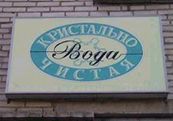
Russian: Кристально чистая вода
English: Crystally clear water
FOLLOW US ON TWITTER

MasterRussian on Twitter