 FR FR |
About us | Home | User agreement | Link to us |
What is a Sinecdoche?
syn-ec-do-che n. Rhet.
a figure of speech in which a part is used for the whole or the whole for a part, the special for the general or the general for the special, as in ten sail for ten ships or Croesus for a rich man. Random House Dictionary
Perhaps you have not heard of such word as "synecdoche" before but you used this rhetorical method many times. You did use one word to designate the whole and a part. The synecdoche takes place when one replaces a word by another based on their ability to mean the same.
For example, Russian words лицо, голова, рука designate parts of the body. At the same time, each of these words can be used to speak of a person:
Посторонним
лицам вход воспрещён.
(Unauthorized persons not admitted)
У меня пять ртов
в семье.
(I have five mouths to feed in my family)
Synecdoche is also a usage of singular instead of plural when talking about a group of things or people.
Студент
нынче не тот пошёл.
(meaning by "cтудент" the students
as a whole)
Often signs of appearance are used to address to or name people. Spoken language is a good example of this:
Я стою вот
за этим синим плащом.
(I am standing behind this person in a blue mackintosh)
Note that not every part of appearance is appropriate for synecdoche. It would be unethical and offensive to designate people basing on their handicaps.
It is also common to substitute a particular detail for the whole in order to set a person apart from others of the kind. In this case a synecdoche should have an attribute:
первая скрипка.
(the first fiddle)
первая ракетка
страны.
(the first tennis-player in the country)
Professional language and slang allow to use collective words instead of those that name an individual thing or a person. It is not so common, but still possible:
Начальство
сегодня не в духе.
(here начальство is one person)
Положи
топор на место. И не тупи инструмент.
(here инструмент is an axe)
Got questions?
Ask them in the Russian Questions and Answers — a place for students, teachers and native Russian speakers to discuss Russian grammar, vocabulary, pronunciation, and other aspects of the Russian language.
Copyright 2001-2026 MasterRussian.com | Privacy Policy | Contact Us
 Russian Lessons
- Russian alphabet
- Names of letters
- Russian Q&A new
- Pronunciation: Cons.
- Pronunciation: Vowels
- Noun Gender/Number
- Cases of Nouns
- Russian Greetings
- Personal Pronouns
- Learning Russian
- 1000 Common Words
- 500 Russian Verbs
- Top Russian Nouns
- » All lessons
- » Guest lessons
Browse Topics
- Start learning Russian
- Forum
- Bookstore
- Dictionaries
- Russian - basic
- Russian - adv
- Pronunciation
- Russian Blog new
- Reading
- Test & quizzes
- Translation
- Verbs
- Verb Conjugations
- Russian numbers
- Russian Tests new
- Vocabulary
- Writing
- Folk music
- Fun stuff
- Leo Tolstoy
- Learner's lore
- Literature
- Personal blogs
- Picture Dictionary new
- Proverbs
- Publications
- Radio & TV
- Russian culture
- Schools in Russia
- Russian Words
- Russian names
- Software
- Russian Words iPhone

Clicks the "Like" button below to get daily updates on Facebook!
Click "Add to circles" to learn Russian on Google+

Search MasterRussian

English » Russian dictionary
WORD OF THE DAY
 RSS
|
iGoogle
|
My Yahoo!
RSS
|
iGoogle
|
My Yahoo!
Meaning: (adj) entire, whole, (pron) all, everything, (particle) only, in all
Pronunciation: [vyehs']
Learn Russian words! »
TODAY'S STREET SIGN
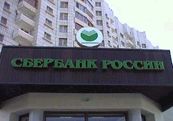
Russian: Сбербанк России
English: Sberbank of Russia
FOLLOW US ON TWITTER

MasterRussian on Twitter