
 FR FR |
About us | Home | User agreement | Link to us |
How to Learn Russian
Active Skills: Speaking and Writing
Speaking is the most difficult type of speech. You must know a large number of words, sample sentences and cliché in order to speak fluently in Russian. Besides that, you need to train yourself to use them automatically depending on the situation.
Speaking skills
What can you do to develop your Russian speaking skills?
- Memorize as many Russian idioms, set phrases and cliché as possible. Practice short dialogs, use proverbs and sayings, and tell anecdotes typical of the target language.
- Read popular Russian stories and plays written in colloquial style. They contain the most useful words and grammar structures.
- Begin to re-tell Russian texts and simple stories after you have been learning the language for 1-2 months. Pay special attention to reproducing the ideas with your own words, but keep your narrative close to the text. Increase the difficulty of the texts gradually.
- Use any opportunity to speak Russian. Communicate with native Russian speakers or people who know the language well. Ask people to correct your mistakes.
- Speak to yourself daily. Get used to frequent monoloques. Describe things around you, tell what you are doing or intend to do.
Writing skills
Writing is secondary in learning a foreign language, but still necessary. One must be able to express his/her ideas in written form in order to have thorough knowledge of the language. Writing helps to memorize new words, especially for those students who have good motor memory.
Here is how you can develop your Russian writing skills.
- Do writing exercises from your text-book. Make written translations from your native language to Russian.
- Think up and commit to paper questions about Russian texts you read.
- Take dictations to practice new Russian vocabulary.
- Reproduce Russian texts in writing.
- As you progress, begin to write compositions on the topics of your interest. Limit the length of your compositions to 200-300 words.
Index of lessons in the series
- How to Learn Russian
- How to Learn Russian: Self-study Process
- How to Learn Russian: Pronunciation
- How to Learn Russian: Grammar
- How to Learn Russian: Listening and Reading
- How to Learn Russian: Speaking and Writing
Got questions?
Ask them in the Russian Questions and Answers — a place for students, teachers and native Russian speakers to discuss Russian grammar, vocabulary, pronunciation, and other aspects of the Russian language.
Copyright 2001-2026 MasterRussian.com | Privacy Policy | Contact Us
 Russian Lessons
- Russian alphabet
- Names of letters
- Russian Q&A new
- Pronunciation: Cons.
- Pronunciation: Vowels
- Noun Gender/Number
- Cases of Nouns
- Russian Greetings
- Personal Pronouns
- Learning Russian
- 1000 Common Words
- 500 Russian Verbs
- Top Russian Nouns
- » All lessons
- » Guest lessons
Browse Topics
- Start learning Russian
- Forum
- Bookstore
- Dictionaries
- Russian - basic
- Russian - adv
- Pronunciation
- Russian Blog new
- Reading
- Test & quizzes
- Translation
- Verbs
- Verb Conjugations
- Russian numbers
- Russian Tests new
- Vocabulary
- Writing
- Folk music
- Fun stuff
- Leo Tolstoy
- Learner's lore
- Literature
- Personal blogs
- Picture Dictionary new
- Proverbs
- Publications
- Radio & TV
- Russian culture
- Schools in Russia
- Russian Words
- Russian names
- Software
- Russian Words iPhone

Clicks the "Like" button below to get daily updates on Facebook!
Click "Add to circles" to learn Russian on Google+

Search MasterRussian

English » Russian dictionary

WORD OF THE DAY
 RSS
|
iGoogle
|
My Yahoo!
RSS
|
iGoogle
|
My Yahoo!
Meaning: house, home, building
Pronunciation: [dohm]
Learn Russian words! »
TODAY'S STREET SIGN
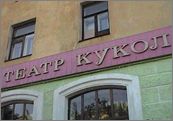
Russian: Театр кукол
English: Puppet theater
FOLLOW US ON TWITTER

MasterRussian on Twitter